
You’ve polished your resume until it shines. You’ve rehearsed your answers about your “greatest weakness” and your “five-year plan.” You look great on paper. But in 2025, your resume is just the cover letter. The real story; the one hiring managers actually trust, is told by your digital shadow.
A candidate looks perfect: great experience, solid references, and a charismatic interview. Then, the background check comes back. It’s not just a criminal record check anymore; it’s a deep dive into the candidate’s digital psyche using Open Source Intelligence (OSINT). Suddenly, that “Global Strategy Leader” is revealed to be an online troll spewing toxic comments on Reddit, or a “flight risk” who constantly complains about their country of residence on X (formerly Twitter).
Today, I’m going to walk you through how these modern investigations work and, more importantly, how to audit your own presence before a recruiter does it for you.
The “Rosetta Stone” Method: How They Find Your “Anonymous” Accounts
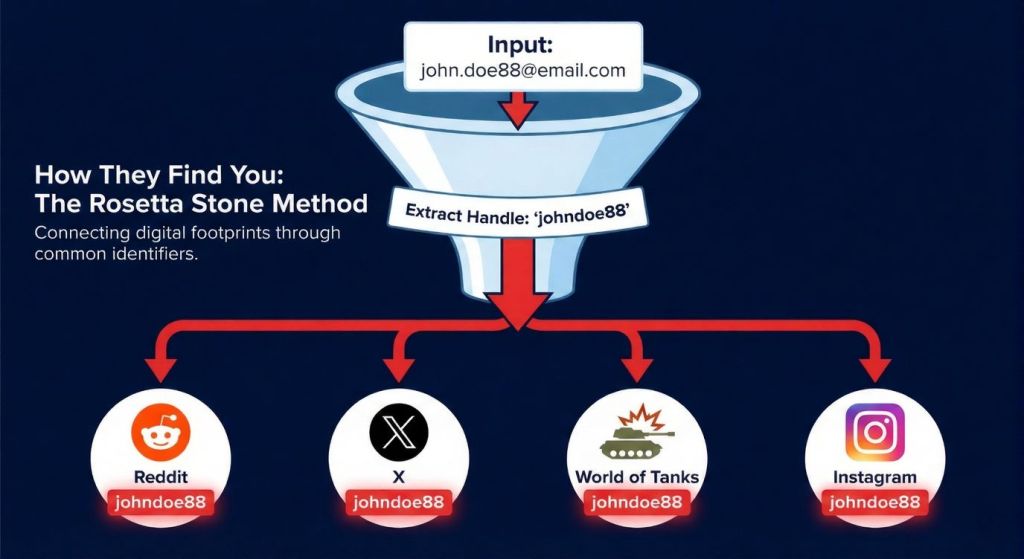
Most people operate under a false sense of security. You think, “My LinkedIn is professional, and my Reddit is anonymous because I use a pseudonym.” That is a dangerous assumption. Professional investigators use a technique I call the “Rosetta Stone” method to link your two worlds.
Here is how it works: They start with the data you provide, usually your personal email address or your LinkedIn URL. Let’s say your email is john.doe88@yahoo.com. That “88” might be your birth year, or just a lucky number. Investigators will strip that down to the core handle: johndoe88 or jd88. They then run this string through specialized tools that scan hundreds of social media platforms, gaming forums, and discussion boards.
If you used johndoe88 to sign up for a World of Tanks account in 2014, or as your handle on a car enthusiast forum, they have found a link. Even if you change your Display Name to “Anonymous Meow,” the underlying username or URL often remains static. Once they find that one loose thread, they pull it. They look for cross-referencing data: a birthday mentioned in a forum post, a specific writing style, or even a repeated profile picture.
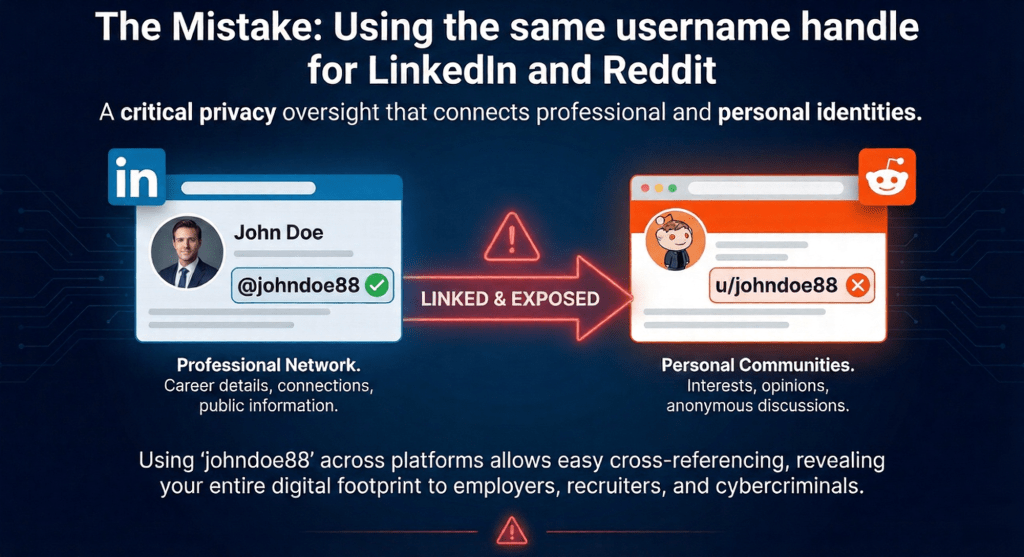
Key Takeaway: If your “burner” accounts share any DNA; username variations, recovery emails, or phone numbers with your professional identity, they are not burner accounts. They are public records.
The Danger of the Resume Vacuum & Embellishments
We all feel the pressure to have a perfect, unbroken career timeline. A gap of two or three years can feel like a scarlet letter. However, in my experience, the attempt to cover up a gap is often fatal to a candidacy, whereas the gap itself is just a conversation starter.
When candidates try to plug a hole in their resume (a “resume vacuum”), they often resort to embellishment. They might list a role at a company that sounds impressive, like “Vice President of Strategy at [Generic Tech Name].” This is where the background check becomes a forensic audit.
Investigators look for a digital footprint for the company itself. If you claim a company is a “Market Leader” or “Number One in the Region,” there should be evidence: press releases, trade show attendance, employee reviews on Glassdoor, and a functional, aged domain. If the only evidence of this company’s existence is your LinkedIn profile, it gets flagged as a “Shell Entity” or “Resume Padding.”
A candidate claimed to be an executive assistant to a CEO for six years. In the corporate world, that role is usually a 2-year rotational gig. Staying in it for six years didn’t show loyalty; it suggested the candidate was likely a freelancer or a “fixer” inflating their title.
The Lesson: Own your gaps. “Freelance Consultant” or “Sabbatical for Personal Development” is verifiable and honest. A fake role at a ghost company is a lie that will get your offer rescinded.
Red Flags That Scream “Toxic Hire”
Background checks aren’t just looking for lies; they are looking for behavior. Companies are terrified of hiring toxicity. They use AI tools to scan your public commentary for sentiment analysis. You might think your rant about local politics or the national pension system is just “venting,” but to an employer, it’s a risk profile.
One major red flag is “Flight Risk” language. If a candidate constantly posts about how much they hate the country they are working in, or refers to their citizenship in derogatory terms (e.g., calling it “useless paper”), an employer sees someone who is mentally checked out. Why would they invest in training you if you are actively planning your escape?
Another massive red flag is disdain for the workforce. Comments that mock specific demographics, like saying older workers are “destined for gig work”, reveal a discriminatory mindset. If you are hired as a manager, how will you treat your team members who fit that demographic? These comments suggest you could be a legal liability for harassment or discrimination suits down the road.
Step-by-Step: How to Audit and Clean Your Digital Footprint
Now that you know the risks, how do you protect yourself? You need to perform a self-audit before you send out a single resume.

1. The Google Permutations Test Don’t just Google your name. Google your email username. Google your most commonly used gaming handle. Google your phone number in quotes. See what comes up. If you find old forum posts from a decade ago, delete them or request removal.
2. Check Your Privacy Settings (Again) Social media platforms update their privacy policies constantly, often resetting your preferences to “Public.” Go through Facebook, Instagram, and X. Ensure your past posts are limited to “Friends Only.”
3. The “Wayback” Check Remember that deleting a tweet doesn’t always remove it from the internet. Caching services like the Wayback Machine store snapshots of the web. While you can’t easily scrub these archives, knowing what is in them allows you to prepare an explanation if it comes up.
4. Sanitize Your “Display Names” If you must have a private account for venting or hobbies, ensure it is completely air-gapped from your real identity. Use a unique email address created specifically for that account, a unique username you have never used elsewhere, and never link it to your primary phone number.
Conclusion

In the digital age, privacy is a discipline, not a default setting. Your professional reputation is an asset that takes years to build and seconds to destroy with a careless post or a lazy lie on a resume.
Don’t let your digital shadow be the reason you miss out on your dream job. Be honest about your history, be discreet with your opinions, and treat your online presence with the same professionalism you bring to the office.
 Attap Kia
Leave a comment