
Introduction
Living in Singapore’s high-cost environment, many professionals are feeling the pinch of slow salary growth and rising expenses. As a result, more Singaporeans are turning to side hustles—not just for extra cash, but to pursue passions and gain financial freedom. The challenge? Balancing a growing side hustle with a demanding full-time job.
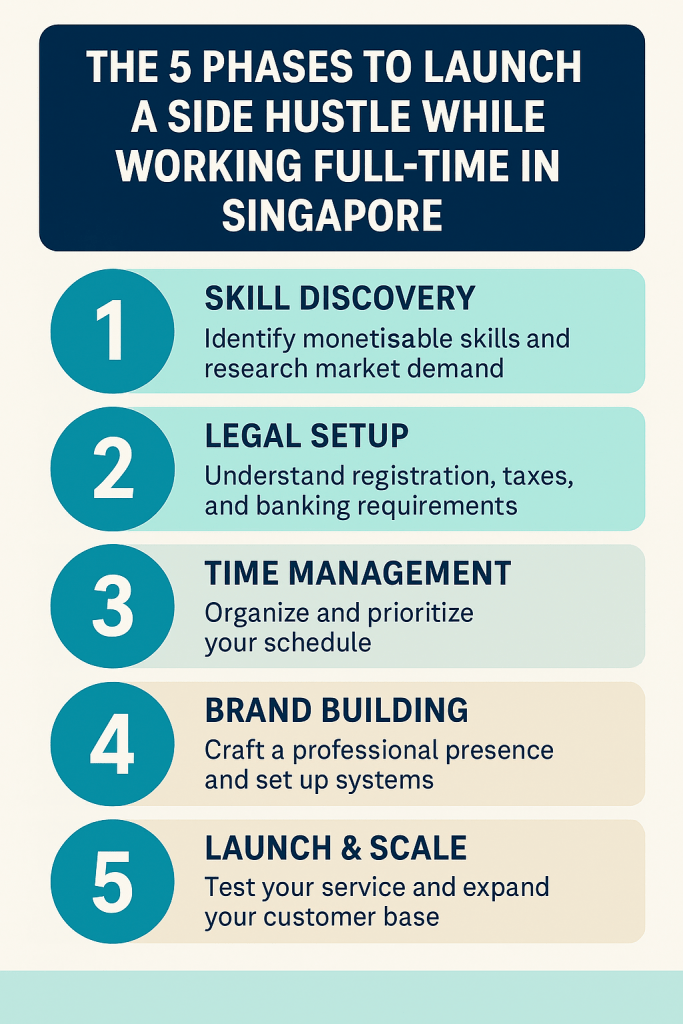
This guide gives you a proven 5-phase framework, built for Singapore’s unique economic and regulatory landscape. It covers how to stay compliant, manage your time, and build a side business that grows without risking your day job.
Understanding Singapore’s Side Hustle Landscape
Singapore offers unique advantages for aspiring entrepreneurs:
- Strong digital infrastructure
- Efficient logistics and payment systems
- Supportive government schemes
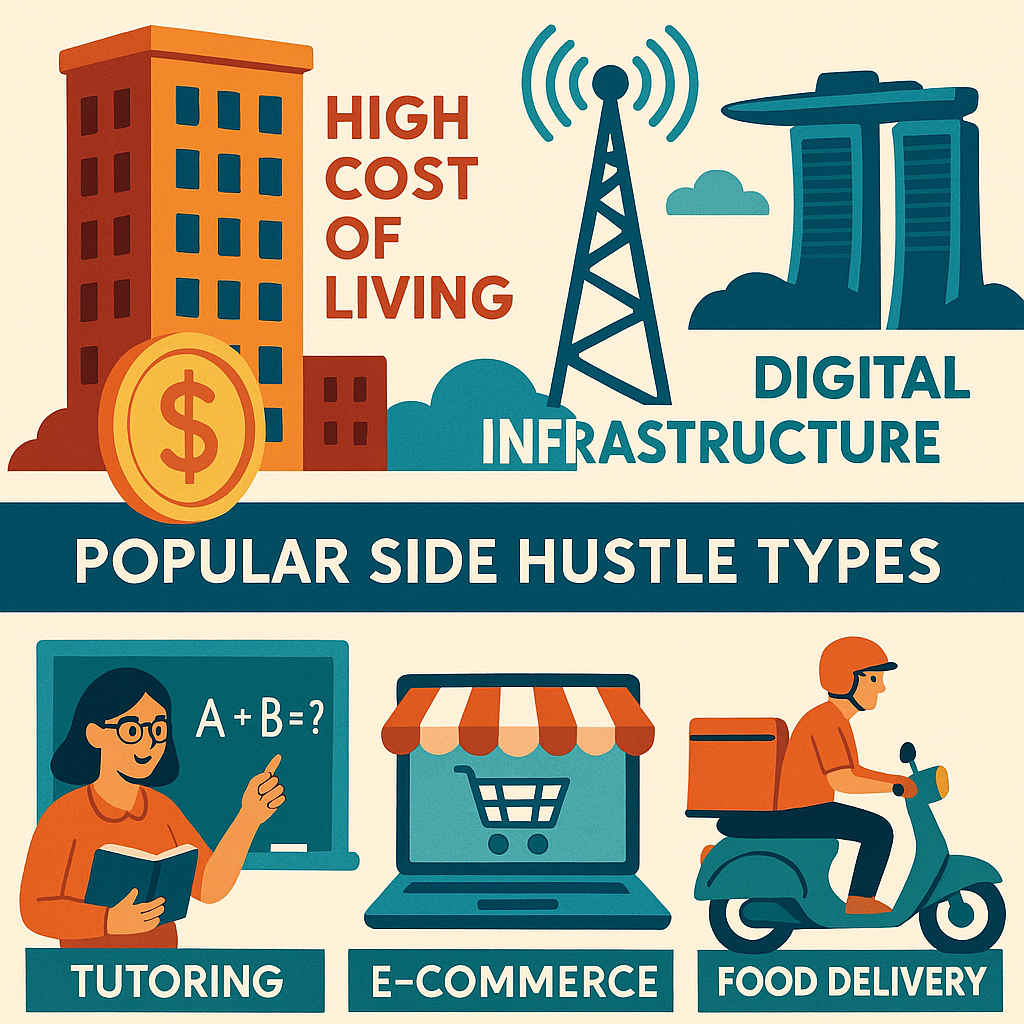
Common side hustles include:
- Digital services (content creation, tutoring, design)
- E-commerce and dropshipping
- Service-based work (consulting, food delivery)
The ACRA registration process is simple, and tax and CPF guidelines are clear—if you know what to look out for. Most side hustlers start earning within six months if they put in consistent effort.
Phase 1: Skill Discovery & Market Research
Too many people jump into trendy side hustles without knowing if they’re a good fit. In Singapore’s fast-moving market, you need:
- Skill Audit: List all your skills—technical, soft, even hobbies. Ask: Would someone pay for this?
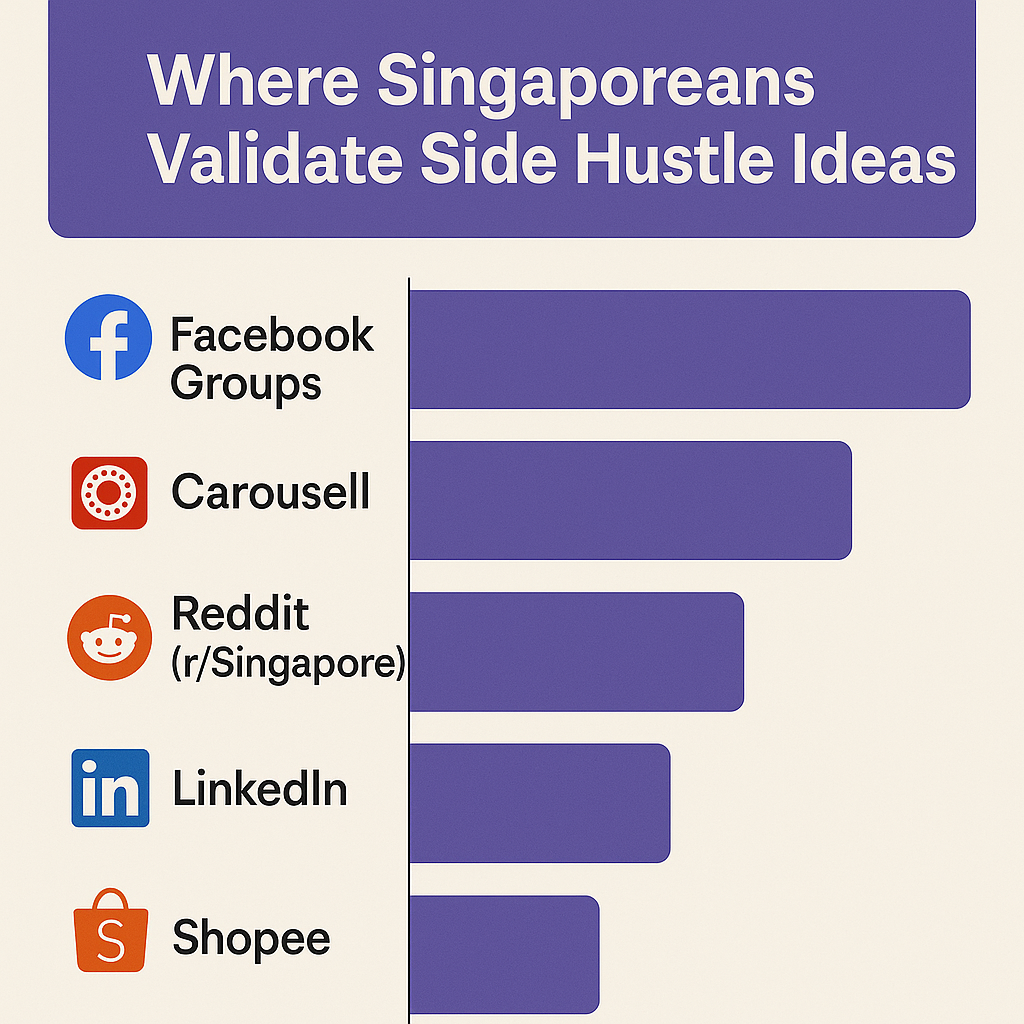
- Demand Validation: Use Facebook groups like “Singapore Freelancers”, Carousell trends, and LinkedIn job listings to see what’s in demand.
- Customer Discovery: Chat with friends and colleagues about their pain points. Ask: “What do you wish someone could help you with?”
- Competitor Research: Check both local and global providers. Look for gaps in service or cultural fit.
Spend 2–4 weeks doing part-time research. This saves time and money later.
Phase 2: Legal & Financial Setup in SG
Singapore makes it easy to get started legally—but you need to know the thresholds.
- ACRA Registration: Only needed if revenue > $30K/year or if you use a non-personal name. Registering a sole proprietorship costs just $15 and takes minutes.
- Tax & CPF: Declare income in your personal tax return. You don’t need to contribute CPF unless you hire someone.
- GST: Only mandatory if revenue > $1M/year. Skip it for most early-stage hustles.
- Banking: Start with a separate personal savings account. Switch to a business account if revenue exceeds $50K.
- Employment Contracts: Check for clauses about outside income. Disclose if needed.
Set aside 20–30% of your income for taxes and keep your finances clean.
Phase 3: Time & Energy Management
Most people don’t fail from lack of time—they fail from poor energy and focus.
- Energy Audit: Track when you’re most productive (e.g. early morning, after dinner) and schedule hustle tasks then.
- Time Blocking: Allocate 5–10 hours per week and stick to it like a meeting.
- 25-5 Rule: For every 25 hours on your hustle, spend 5 hours on upskilling or improving your main job.
- Automate Early: Use tools like Zapier, Calendly, and email templates to save time.
- Family Buy-In: Share your goals so your schedule isn’t misunderstood at home.
Phase 4: Build Your Brand & Foundation
In Singapore, presentation matters—even for a side hustle.
- Positioning: Define what you do and who you help in one sentence. E.g., “I help SG parents outsource birthday party planning on a budget.”
- Basic Setup:
- Landing page (Carrd, Wix, Notion)
- Social profiles (LinkedIn for B2B, Instagram for B2C)
- Contact system (WhatsApp, Calendly)
- Portfolio & Proof:
- Show outcomes, not just services
- Use testimonials and before/after case studies
- SEO Basics:
- Use “Singapore” in your page titles
- Register with Google Business Profile even if you’re remote
Start lean but professional.
Phase 5: Launch & Scale (The Smart Way)
Skip the big launch. Soft-launch to test and improve first.
- Start with Warm Leads: Offer your product or service to people you already know. Ask for honest feedback.
- Build Early Momentum:
- Join relevant Telegram groups, Facebook pages, and LinkedIn circles
- Offer referral bonuses (e.g., $10 credit or 20% off)
- Partner Up: Pair with complementary hustlers. A copywriter + designer = great team.
- Share Value, Not Ads: Post tips or before-after results, not just promos.
- Create Systems Early: Use SOPs for repeatable tasks. Tools like Notion or Google Docs make this easy.
Keep track of what works. Improve every month.
Common Pitfalls in Singapore
- Perfection Paralysis: Don’t wait for “perfect”—launch, learn, improve.
- No Legal Setup: Avoid tax penalties and contract violations. Register when needed.
- Time Blindness: Admin tasks can take more time than actual delivery. Plan for 40% buffer.
- Wrong Pricing: Too low = bad clients. Too high = no clients. Start mid-market.
- Poor Service: One bad review on Google can destroy momentum. Always overdeliver.
Conclusion
A successful side hustle in Singapore takes planning, systems, and consistent execution. This 5-phase framework helps you:
- Match your strengths with market demand
- Stay compliant and financially clean
- Use your time and energy wisely
- Build a credible brand
- Launch without burning out
Ready to start? Block 2 hours this weekend to complete your skill audit and explore real demand. That’s your first step toward extra income and independence — without quitting your day job.

 Attap Kia
Leave a comment