
A Closer Look at Employment Data, Citizen Concerns, and the Need for Nuance
As Singapore continues to navigate its demographic and economic challenges, the question of whether foreigners are displacing Singaporean workers remains deeply relevant. A recent article by Vulcan Post titled “Do Foreigners Steal Good Jobs From Singaporeans?” attempts to address this concern using Ministry of Manpower (MOM) data. While the piece provides valuable information, certain oversimplifications and omissions merit further scrutiny.
I would like to offer a more comprehensive, transparent, and balanced perspective—one that acknowledges the complexity of this issue without painting it as xenophobic or overly nationalistic.
The Workforce Composition: A Numbers Perspective
As of June 2024:
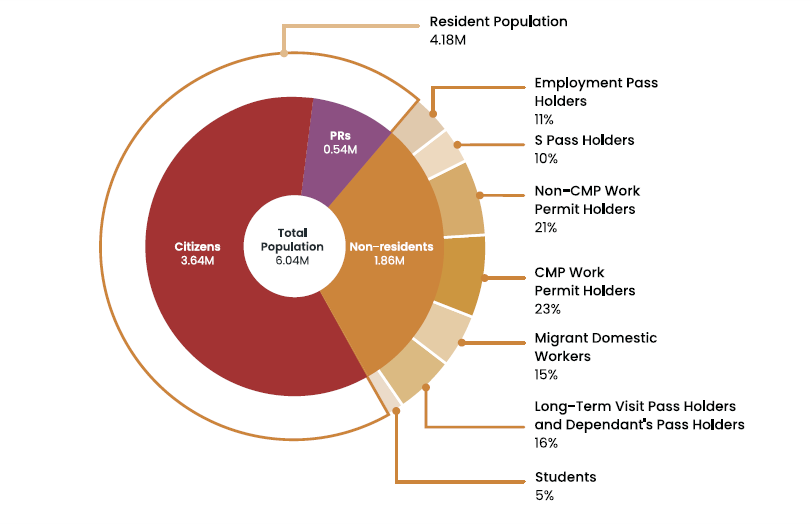
- Singapore’s total population stands at 6.04 million.
- 3.64 million are Singapore citizens.
- 544,900 are Permanent Residents (PRs).
- 1.86 million are non-residents.
- According to MOM’s Labour Market Reports:
- In 2023, total employment grew by 88,400.
- 83,500 jobs (94.5%) went to non-residents.
- In 2024, total employment grew by 44,500.
- 35,700 jobs (80.2%) went to non-residents.
- 8,800 jobs went to residents, reversing a decline seen in 2023.
- Sources:
- MOM Labour Market Report Q4 2023
- MOM Labour Market Report Q4 2024
- This trend over two consecutive years suggests a structural pattern rather than a one-off occurrence. With citizens making up just 60% of the total population—and only about 2.2 million of working age—many Singaporeans reasonably question whether they are being edged out of job opportunities. In contrast, Singapore’s workforce includes approximately 1.86 million non-residents and 544,900 Permanent Residents (PRs), meaning that non-citizens (PRs + non-residents) form a sizeable segment of the labour force. When the vast majority of newly created positions consistently go to non-citizens, the imbalance between 2.2 million working-age citizens and over 2.4 million non-citizens becomes more than just a statistic—it becomes a structural concern about the long-term equity and sustainability of our labour market.
SCs vs PRs: Why the Distinction Still Matters
The Vulcan article states:
“Distinguishing between SCs and PRs in this particular case is irrelevant, because for all intents and purposes, both groups enjoy similar privileges—and are burdened with similar obligations.”
However, this conflation raises legitimate concerns:
- National Service (NS): Male PRs who receive status after age 18 typically do not serve NS, unlike citizens. This distinction alone challenges the notion of “similar obligations.”
- CPF Contributions: New PRs benefit from phased CPF contribution rates for the first two years, offering a cost advantage to employers compared to hiring citizens.
- Citizenship Privileges and Responsibilities: Only citizens can vote or stand for elections. At the same time, they are expected to bear full NS obligations, often without some of the structural advantages that PRs or non-residents may enjoy. For example:
- Greater Overseas Mobility and Exit Flexibility
- Lower Cost to Employers
- Lower or No CPF Obligations
- Lower Expectations in Wages or Benefits
- More Flexible Work Permit Structures
- Strategic Economic Positioning
- Citizenship Limitations
In this light, lumping SCs and PRs together can mask meaningful policy implications and socio-economic tensions.
Workforce Demand vs. Citizen Displacement
Singaporeans are often told that foreign workers fill jobs that locals do not want. But when 94.5% of new jobs go to non-residents, the argument becomes harder to accept at face value. Especially when citizens express a desire to work but still face stiff competition or stagnating wages.
In a 2021 survey by the Institute of Policy Studies (IPS), 50.3% of respondents agreed to a great or moderate extent that immigrants take jobs away from people born in Singapore. This suggests that citizen concerns are neither new nor insignificant.
While this data may not reflect the most recent sentiment, it demonstrates a persistent perception of job competition that cannot be dismissed lightly. These concerns are often tied to the fact that many foreign hires may come with:
- Lower or no CPF obligations
- Lower expectations in wages or benefits
- More flexible work permit structures
These factors can create cost incentives that make foreign hires more attractive to employers, sometimes at the expense of building up the local workforce
National Priorities: What Am I Hoping For?
Singapore must stay globally competitive and demographically resilient. This reality requires openness to foreign talent. But at the same time, policies must remain transparent, balanced, and fair—especially to citizens who shoulder full obligations, pay taxes, and have a long-term stake in the country.
I am not advocating for a hardline stance against foreign workers or PRs. But I do advocate for:
- More granular, transparent employment data that separates SCs, PRs, and non-residents.
- Regular reviews of fair hiring practices and enforcement of Fair Consideration Framework (FCF) guidelines.
- A balanced narrative that acknowledges citizen concerns without dismissing them as protectionist.
A Call for Nuance and Transparency
Singaporeans deserve a deeper, more honest dialogue around job competition and the social compact. Oversimplified narratives—such as lumping SCs and PRs together, or implying that job growth naturally means shared prosperity—can lead to distrust and resentment.
Instead, I believe we should strive for:
- Open data, so citizens can better understand how employment policies affect them.
- Clearer accountability, especially when local talent is bypassed despite being qualified.
- Public engagement, to include citizen voices in shaping future manpower policies.
Final Thoughts
Economic growth and global competitiveness must be pursued—but not at the cost of social cohesion and fairness. Singapore’s long-term strength lies in its ability to balance economic pragmatism with inclusive policies that protect and empower its citizens.
Let’s move beyond binary debates and embrace the complexity this issue deserves.
Sources cited:
• Population in Brief 2024: https://www.population.gov.sg/files/media-centre/publications/Population_in_Brief_2024.pdf
• MOM Labour Market Report Q4 2023: https://stats.mom.gov.sg/Pages/Labour-Market-Report-4Q-2023.aspx
MOM Labour Market Report Q4 2024: https://stats.mom.gov.sg/Pages/Labour-Market-Report-4Q-2024.aspx
• CPF SPR Contribution Rates: https://www.cpf.gov.sg/employer/employer-obligations/how-much-cpf-contributions-to-pay
• IRAS Tax Residency and Rates: https://www.iras.gov.sg/taxes/individual-income-tax/basics-of-individual-income-tax/tax-residency-and-tax-rates/individual-income-tax-rates
• IPS Study: https://lkyspp.nus.edu.sg/docs/default-source/ips/today_most-sporeans-prs-agree-immigration-is-good-for-economy-but-half-worry-about-foreigners-taking-jobs-ips-report_230921.pdf

 Attap Kia
Leave a comment