Introduction
Singapore’s equatorial climate has always been warm, but recent years have brought unprecedented spikes in temperature. In 2023, parts of the country recorded some of the hottest days in history. As climate change accelerates, heatwaves are becoming more frequent and severe.
So how are Singaporeans adapting? This article explores both personal strategies and community-led responses to extreme heat. From hydration hacks to public cooling spaces, and from volunteer outreach to government initiatives, here’s how the island nation is staying safe—and cool—under pressure.
Understanding the Singapore Heatwave Crisis
While Singapore doesn’t define heatwaves in the same way as temperate countries, its extended periods of high heat and humidity—often exceeding 35°C—have become more common and more intense.
– Why the spike? Urban heat islands, global warming, and deforestation across Southeast Asia all play a part.
– When is it worst? Typically from March to May and again around August.
– What’s different now? 2023 saw numerous days over 34°C, including May 13, which hit 37°C—the highest in 40 years.
Urban districts like Toa Payoh and Paya Lebar, with high-rise density and less vegetation, feel the heat most acutely.
Everyday Coping Strategies for Heatwaves
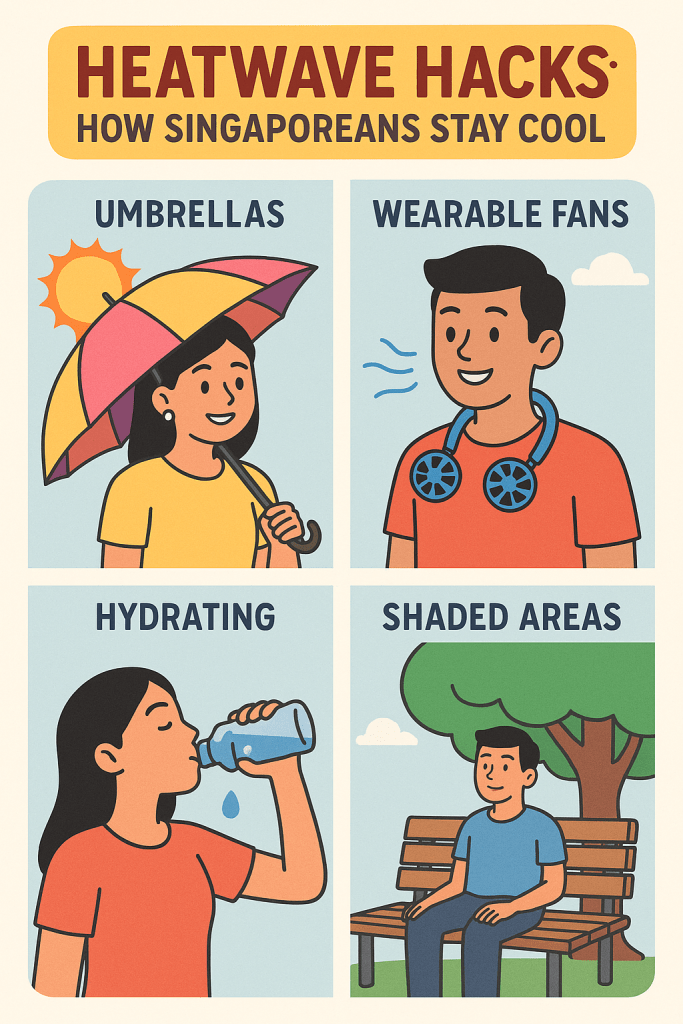
Residents are taking practical measures to manage the heat:
– Stay hydrated: Aim for 8–10 glasses of water per day. Avoid caffeine and sugary drinks.
– Ventilation hacks: Use cross-breezes, blackout curtains, and fans positioned near frozen water bottles for DIY cooling.
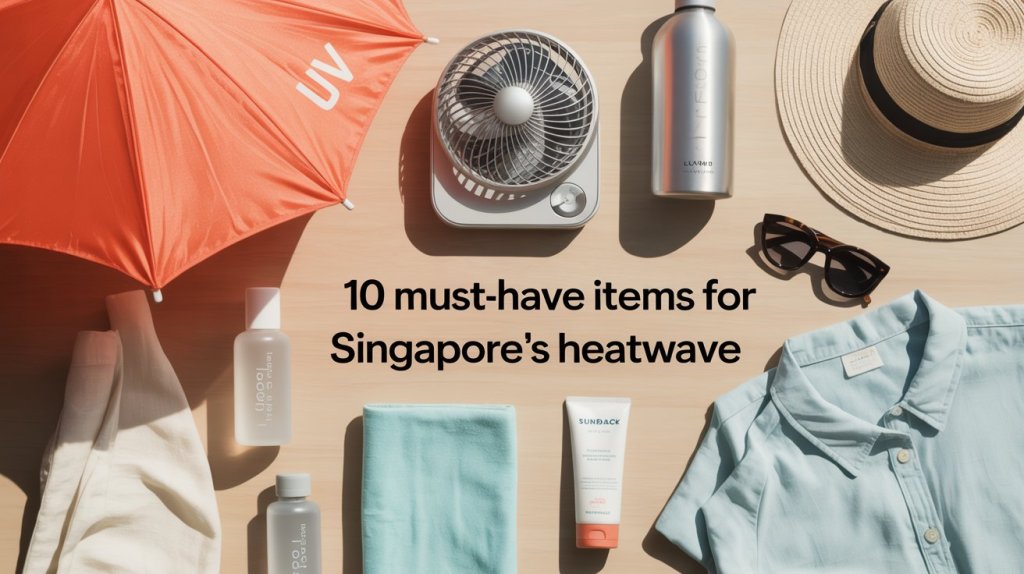
– Dress smart: Light-colored, breathable fabrics like cotton and linen help regulate body temperature.
Outdoor activities should be rescheduled to early mornings or late evenings, especially for children and the elderly.
Community Responses and Local Initiatives
Community spirit is one of Singapore’s greatest assets. During the 2023 and 2024 heat surges:
– Public cooling spaces such as libraries, community centers, and malls were encouraged as safe places to rest and rehydrate.
– Volunteers from local groups checked on seniors, handed out hydration kits, and offered fans to those in need.
– Hydration points were set up in public areas like MRT stations and hawker centers by some grassroots groups.
These efforts were often supported by organizations like the People’s Association and local town councils.
Government and NGO Involvement
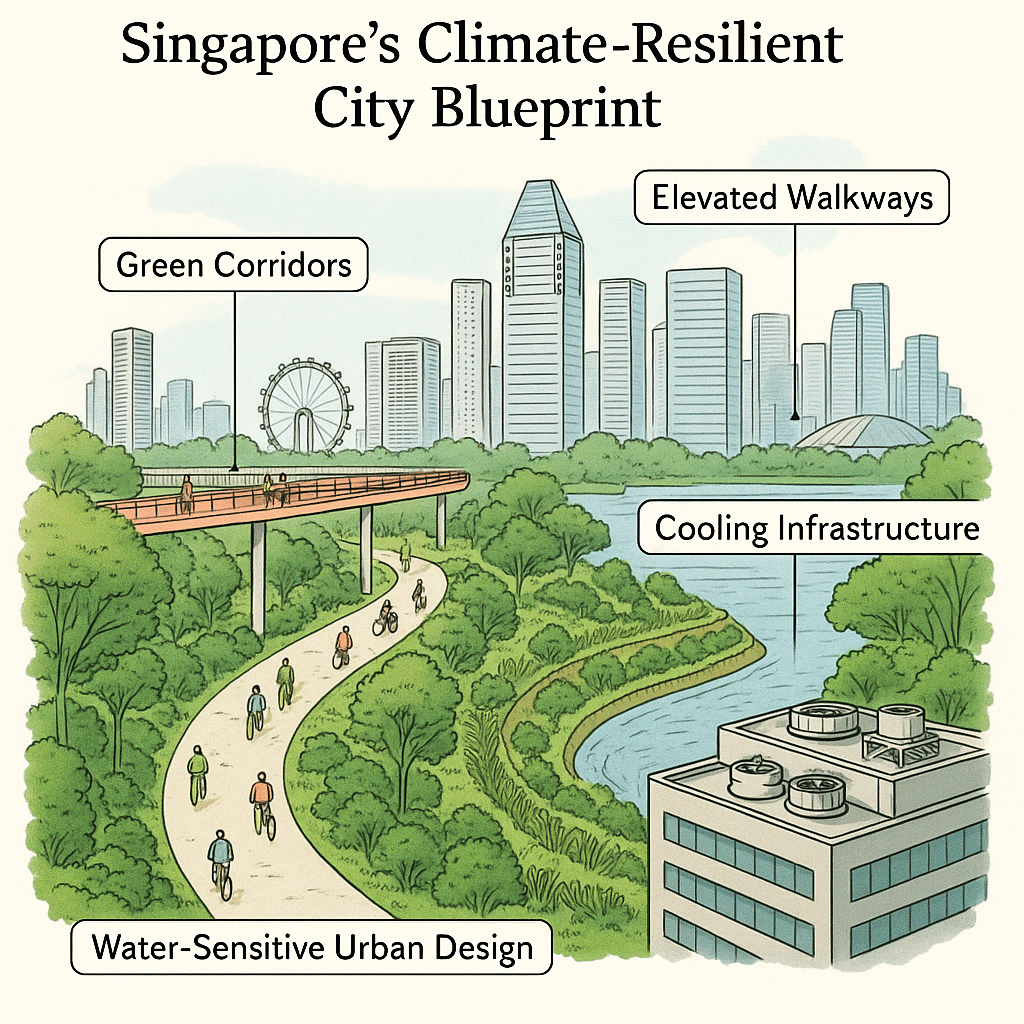
The Singapore government is addressing urban heat through the Singapore Green Plan 2030, which includes:
– Expanding tree canopy coverage and green corridors
– Encouraging climate-responsive building design (e.g., cool roofs)
– Increasing community awareness about heat risks
While there isn’t a standalone “Heat Resilience Action Plan” yet, resilience against extreme heat is integrated into various national strategies.
NGOs such as Engineering Good and Beyond Social Services have also stepped up to assist vulnerable populations, particularly low-income families, with fans, home modifications, and community outreach.
When to Seek Help – Recognizing Heat Emergencies
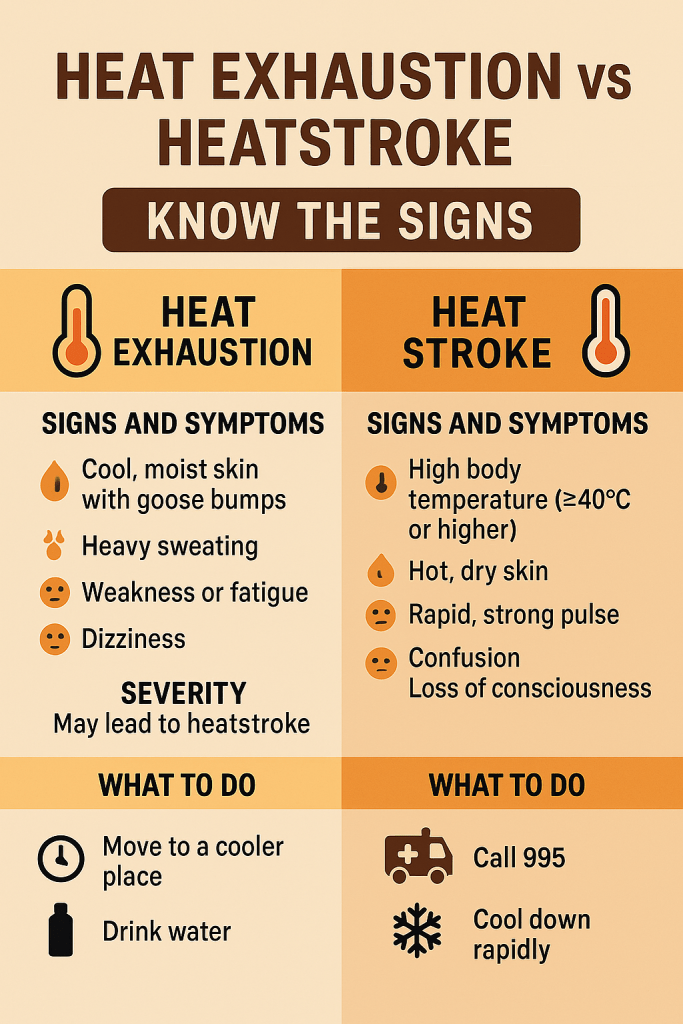
Understanding the signs of heat-related illness is essential:
– Heat exhaustion: Fatigue, dizziness, nausea, clammy skin, heavy sweating.
– Heatstroke (emergency): Body temp above 40°C, confusion, fainting, and hot dry skin.
What to do:
– Move the person to a cool, shaded or air-conditioned space
– Provide fluids (only if they’re conscious)
– Apply wet cloths to pulse points (neck, armpits, wrists)
– Call 995 for SCDF in emergencies
Conclusion & Call to Action
Heatwaves in Singapore are becoming more than a seasonal inconvenience—they are a public health issue. But with preparedness, empathy, and community support, we can respond effectively.
Remember:
– Stay hydrated
– Dress for the heat
– Check on vulnerable neighbors
– Know when to call for help
Sources and References
– National Environment Agency (NEA): https://www.nea.gov.sg
– Singapore Meteorological Service: https://www.weather.gov.sg
– Ministry of Sustainability and the Environment: https://www.mse.gov.sg
– The Straits Times – “Singapore records hottest day in 40 years”
– Channel NewsAsia – “How Singapore plans to tackle urban heat under Green Plan 2030”
– Health Promotion Board: “Tips to stay safe during extreme heat”
– WHO & CDC guidelines on heat-related illnesses

 Attap Kia
Leave a comment