Introduction
Singapore’s elections often focus on visible political engagement — rallies, speeches, and headlines. But behind every GRC result lies a quieter force: the silent voters. These are individuals who vote without fanfare, often without expressing political opinions openly. In this article, we unpack who they are, what influences them, and why their silence carries weight. You’ll also find a visual breakdown in our custom infographic designed with DALL·E.
Defining Silent Voters in the Singapore Context
So, who exactly are silent voters?
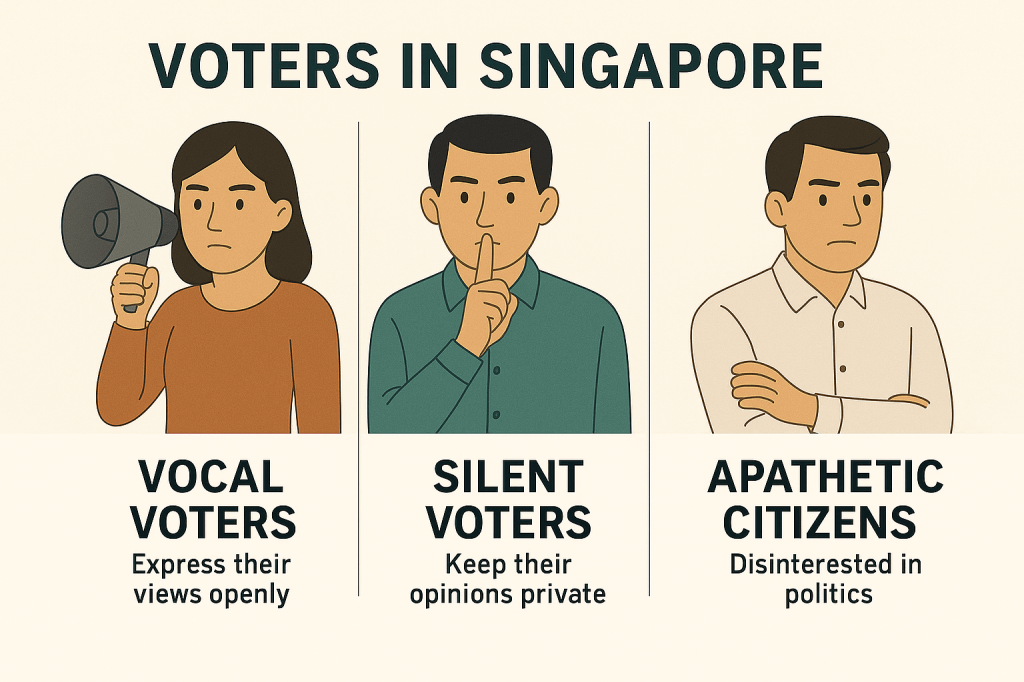
They’re not necessarily disengaged or apathetic — many do care deeply about national issues. What makes them “silent” is the absence of outward political expression. They avoid political conversations at work, don’t share views on social media, and may not even talk politics at home.
They’re distinct from apathetic voters, who don’t care at all. Silent voters often consume political content privately and vote with purpose — just without fanfare.
Why the silence? In a tightly managed political landscape, many Singaporeans have learned to separate private views from public expression — choosing to observe quietly and participate discreetly at the polls.
TL;DR: Silent voters are informed but discreet. They’re Singapore’s political introverts — powerful in numbers, invisible in discourse.
Factors Driving Political Silence
Several factors fuel this silence:
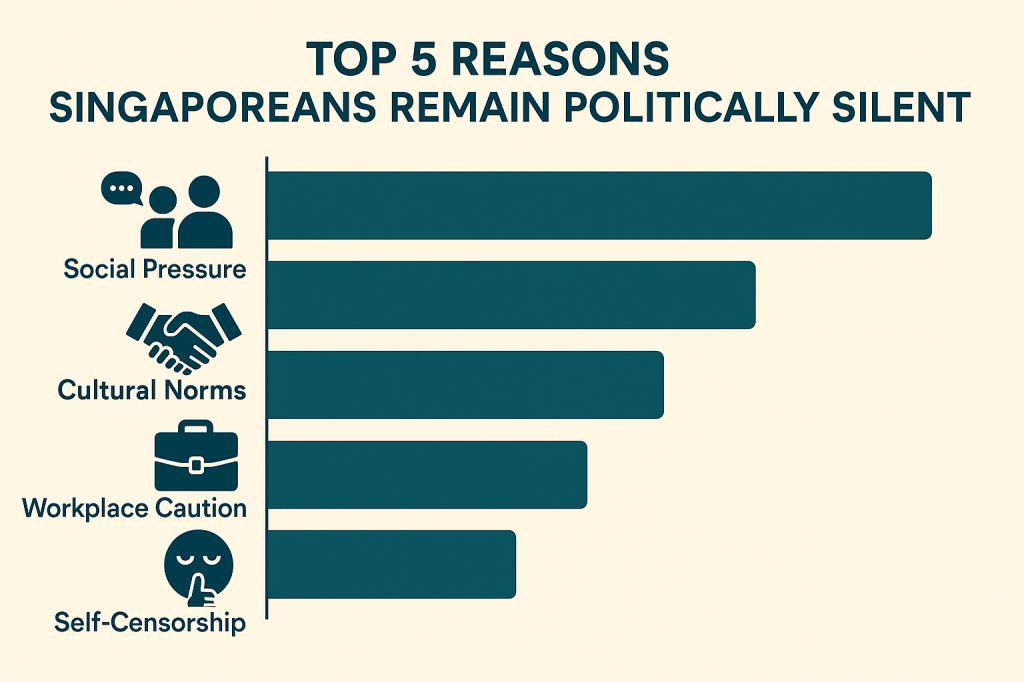
- Social Pressures: Many Singaporeans fear backlash or judgment, especially in professional environments. Talking politics can feel risky in a small, tightly-knit society.
- Cultural Norms: There’s a strong emphasis on harmony over confrontation. Expressing dissent is often seen as disruptive.
- Self-Censorship and Caution: Concerns about reputational risk or crossing sensitive lines — particularly in professional or public settings — have contributed to a cautious communication culture. This doesn’t prevent people from voting, but it may limit open political dialogue.
- Lack of Political Alternatives: Some feel that no party fully represents their views, making engagement feel pointless beyond voting.
In a 2020 survey by Blackbox, over 40% of respondents admitted they “prefer not to discuss politics at all.” This isn’t ignorance — it’s risk aversion.
In short, political silence isn’t always a sign of disengagement. It’s often self-preservation.
Silent Voters and Election Outcomes
In contested wards, silent voters often act as swing voters. Since they don’t voice opinions publicly, their leanings are hard to predict. Campaigns can’t directly target them with tailored messaging because they don’t signal their intent. This makes them especially powerful in tight races.
In uncontested constituencies, the absence of a vote doesn’t equate to the absence of opinion. Silent voters in these areas may still hold strong views — about governance, policy direction, or representation — but lack a formal outlet to express them. These views often emerge in less visible ways: quiet discussions among friends, anonymous online commentary, or growing interest in alternative political content. Their silence is not disengagement — it’s an undercurrent that still shapes civic sentiment.
In some elections, the margin of victory is less than 5%. Silent voters — who quietly cast decisive ballots — can easily swing those numbers.
Are Silent Voters a Threat or Safeguard to Democracy?
It’s tempting to view political silence as a threat. And in some ways, it is — a disengaged or fearful public weakens public discourse and makes governments less accountable.
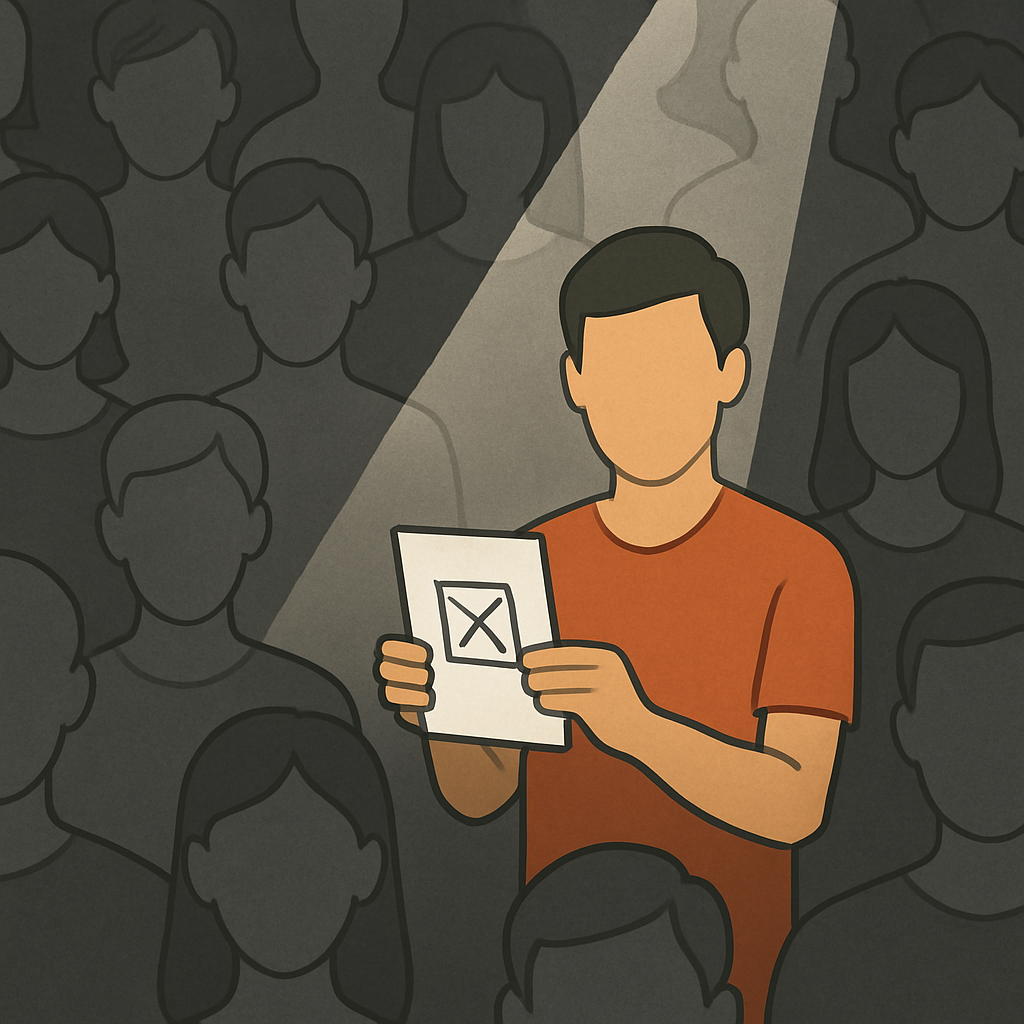
But silence isn’t always bad. It can be a sign of civic maturity. Not everyone wants to join a rally or post long Facebook rants. Some people prefer informed, quiet reflection — and vote accordingly.
Political scientists refer to this as “passive engagement.” It means voters are paying attention, just not participating in noisy ways. That’s still democracy — just a quieter version.
Still, the balance matters. If too many citizens withdraw from discourse altogether, it erodes checks and balances. A silent majority shouldn’t become a silenced majority.
The key question: Are silent voters choosing to be quiet, or being forced into it?
What Can Be Done to Engage Them?
To reach silent voters, we don’t need louder debates — we need safer spaces for conversation.
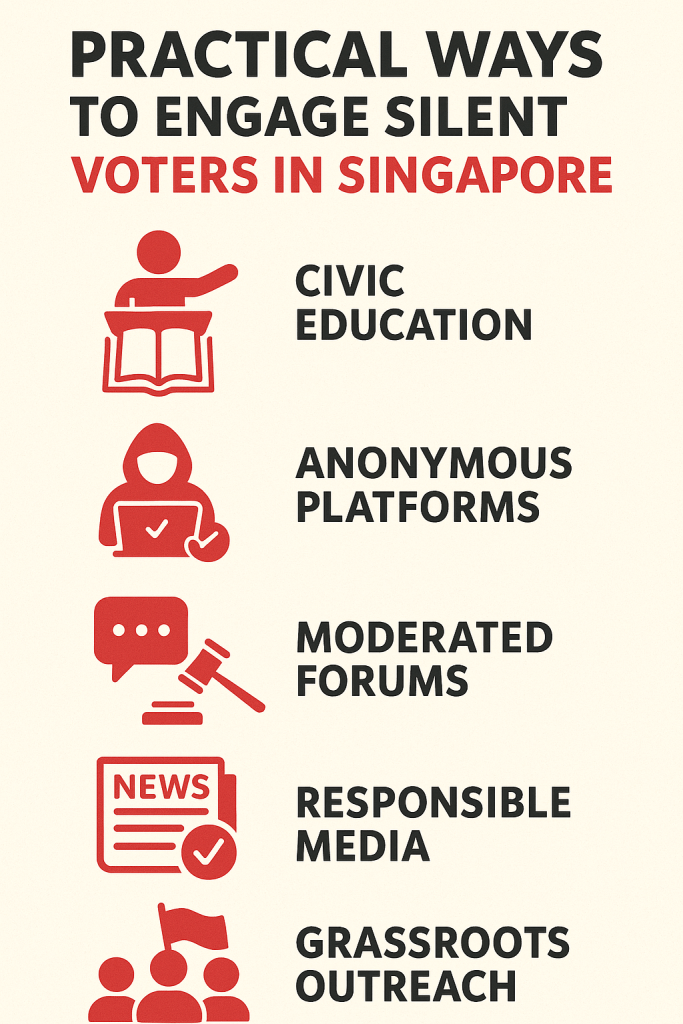
- Civic Education: Schools can teach students how to evaluate policies, not just memorize facts. Civics should encourage thoughtful discussion, not fear.
- Anonymous Feedback Platforms: Channels where people can ask questions or express opinions anonymously could foster more participation.
- Public Forums and Dialogue Spaces: Moderated events that allow for respectful dissent help normalize political discussion.
- Media Responsibility: Press coverage that avoids sensationalism and fearmongering can rebuild trust.
- Community Outreach: NGOs and grassroots groups should focus on door-to-door education and neutral voter literacy campaigns.
Empowerment, not polarization, is the path forward.
Conclusion: Why Their Silence Speaks Volumes
Silent voters are not invisible — we just haven’t learned how to see them. Their absence from the public square doesn’t mean apathy. In fact, many are deeply patriotic and want the best for Singapore — they just prefer privacy over publicity.
As Singapore evolves, understanding and engaging the silent voter will be key to keeping democracy vibrant and inclusive.
📢 Call to Action
If you found this article insightful, share it with a friend — or better yet, discuss it. Even a quiet democracy deserves a voice.

 Attap Kia
Leave a comment