Introduction
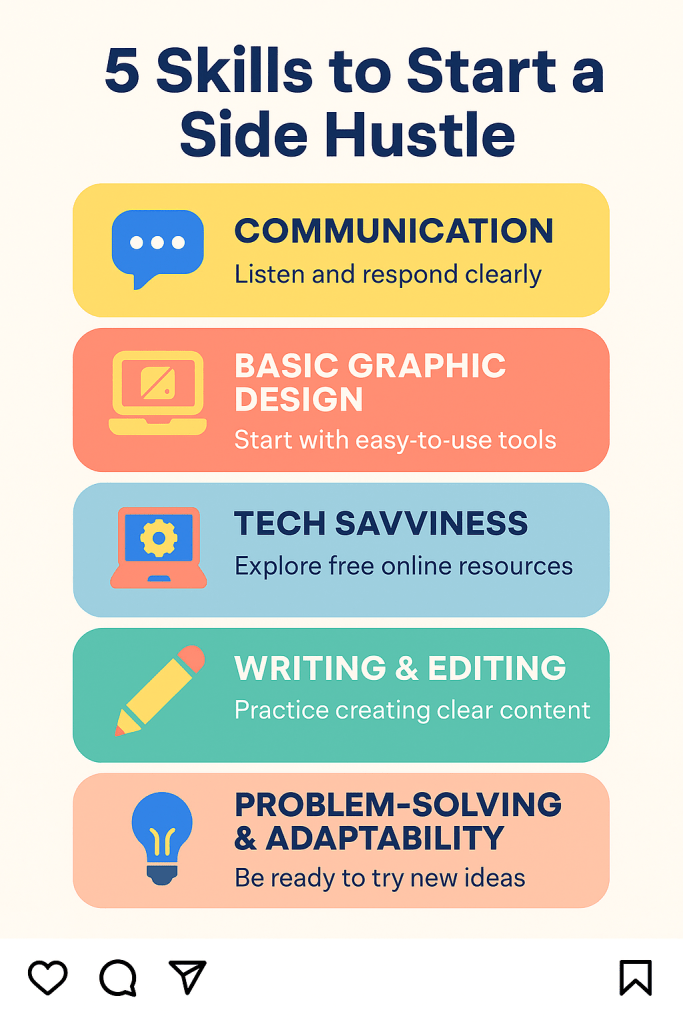
Starting a side hustle can feel overwhelming—especially if you’re not sure what you’re “good at.” The good news? You don’t need to be an expert to get started. In this article, we’ll break down 5 core skills anyone can learn that unlock real income opportunities. We’ll also share free tools and helpful visuals to get you rolling fast.
1. Communication Skills
If there’s one skill that applies to almost every side hustle out there, it’s communication. Whether you’re chatting with clients, pitching yourself on a platform like Upwork, or just replying to emails professionally, the way you present yourself matters. You don’t need to sound like a corporate robot—just clear, respectful, and human.

One underrated part of communication? Listening. If you’re doing freelance work, asking good questions and genuinely understanding what someone wants will make you stand out from the crowd. And when you explain things back in simple, friendly terms, clients love you for it.
The good news? You can practice this skill every day. Start by re-reading your texts or DMs before you hit send. Try mirroring tone in emails. Watch how people communicate in your favorite podcasts or YouTube channels. Communication is a skill—and like any skill, it improves with practice.
2. Basic Graphic Design
You don’t need to be a pro designer to make side hustle money from design. Canva, a free and beginner-friendly tool, has opened the door for anyone to create polished visuals. Think logos, social posts, flyers, or even resumes—if you can drag and drop, you can start learning design.
Side gigs like creating social media graphics or simple branding packs are totally doable. Tons of small businesses, bloggers, and content creators are looking for budget-friendly design help. You can offer value just by being quick and consistent.

To level up, check out free Canva tutorials, study layouts on Pinterest, or reverse-engineer Instagram posts that catch your eye. Play around with color combos and fonts. You’ll be surprised how fast you improve. Pro tip: start your own mock project to showcase your skills—no clients required.
3. Tech Savviness (Digital Literacy)
Being “tech savvy” isn’t about knowing how to code—it’s about being comfortable with tools that make online work easier. Think of Google Docs, Trello, Zoom, Canva, Notion, and file-sharing tools like Dropbox or Drive. If you can navigate these smoothly, you’re already ahead of the game.
Many side hustles involve remote work, so knowing how to communicate virtually, organize tasks, and troubleshoot small tech issues can save the day. Employers or clients appreciate someone who doesn’t get flustered over a broken link or unfamiliar platform.
The best part? You can learn these tools for free. YouTube tutorials, Google’s own training programs, and just plain experimenting will get you up to speed. Make it a habit to Google your way out of problems. That “figure it out” energy is a huge part of freelancing success.
4. Writing & Editing
If you’ve ever written a paper, blog post, or even a killer caption—you’re already writing. Writing is one of the most flexible side hustle skills out there. You can write blog content, product descriptions, newsletters, resumes, and more. Some people even ghostwrite social media posts for influencers or small biz owners.
Good writing doesn’t mean big words or long paragraphs. In fact, clear and punchy writing is more valuable. Clients want content that’s easy to read and gets to the point. Editing is just as important—catching typos, trimming fluff, and making things flow better.
Want to start? Try rewriting an existing article in your own voice. Offer to help a friend with their website or LinkedIn bio. You don’t need a degree or a portfolio to begin—just start typing, keep it simple, and learn as you go.
5. Problem-Solving & Adaptability
Freelancing and side hustles are full of curveballs. A client ghosts you. A payment is late. A tool you rely on changes overnight. That’s where adaptability shines. The people who succeed in side hustles aren’t necessarily the smartest—they’re the ones who keep moving forward when stuff goes sideways.
Problem-solving means thinking creatively. Maybe a client can’t afford your rate—so you offer a smaller package. Maybe your Wi-Fi dies—you find a backup spot to work. These small pivots add up and build resilience.
You don’t need to be naturally “entrepreneurial” to have this mindset. You just need to start looking at problems as puzzles. Every gig you take, every client you work with, every mini-failure—it all teaches you something useful for the next one. Flexibility is your superpower.
Conclusion
Side hustles aren’t just about what you do—they’re about what you learn. These five skills—communication, design, digital literacy, writing, and adaptability—can open real income doors, even if you’re just getting started. And the best part? None of them require fancy degrees or expensive gear.
Take it one skill at a time. Pick one, practice for 20 minutes a day, and test it out in the real world. You’ll gain confidence and momentum faster than you think.
💡 Want more skill-based gig ideas? Sign up for our free newsletter—packed with tools, tips, and tutorials!

 Attap Kia
Leave a comment